
Clogged Drain Troubleshooting for Grand Rapids Homes
A clogged drain is the most common plumbing problem in any house. Two questions narrow it down: which fixture is affected, and what the water is doing. One slow sink is usually a clog you can reach; several slow drains point to the main line.
Clogged Drain Troubleshooter
Choose the fixture and what you see, then press the button.
Telling a Single Clog From a Main Line Blockage
What matters most is whether the trouble stays in one fixture or reaches several. A blocked main drain sends every fixture’s water to the lowest opening in the house.
| Symptom | Single fixture or whole house | Likely cause | Next step |
|---|---|---|---|
| One sink or tub slow, the rest normal | One fixture | Hair, soap or grease in that fixture’s trap | Clean the stopper, then plunge |
| Toilet fills high, then drains slowly | One fixture | Paper or a wipe caught in the trapway | Flange plunger, then a toilet auger |
| Toilet bubbles when the tub drains | Two sharing a line | A clog in the shared branch line or a blocked vent | Call a plumber: plunging the toilet will not reach it |
| Floor drain backs up when the washer runs | Whole house | A blockage in the main drain | Stop the washer and call a plumber |
| Every drain slow, toilets gurgling | Whole house | Roots or a break in an older sewer line | Cut back on water and call a plumber |
| Sewer smell from a drain nobody uses | One fixture | A dry trap | Pour in water to refill the trap |
Clearing a Simple Clog Safely
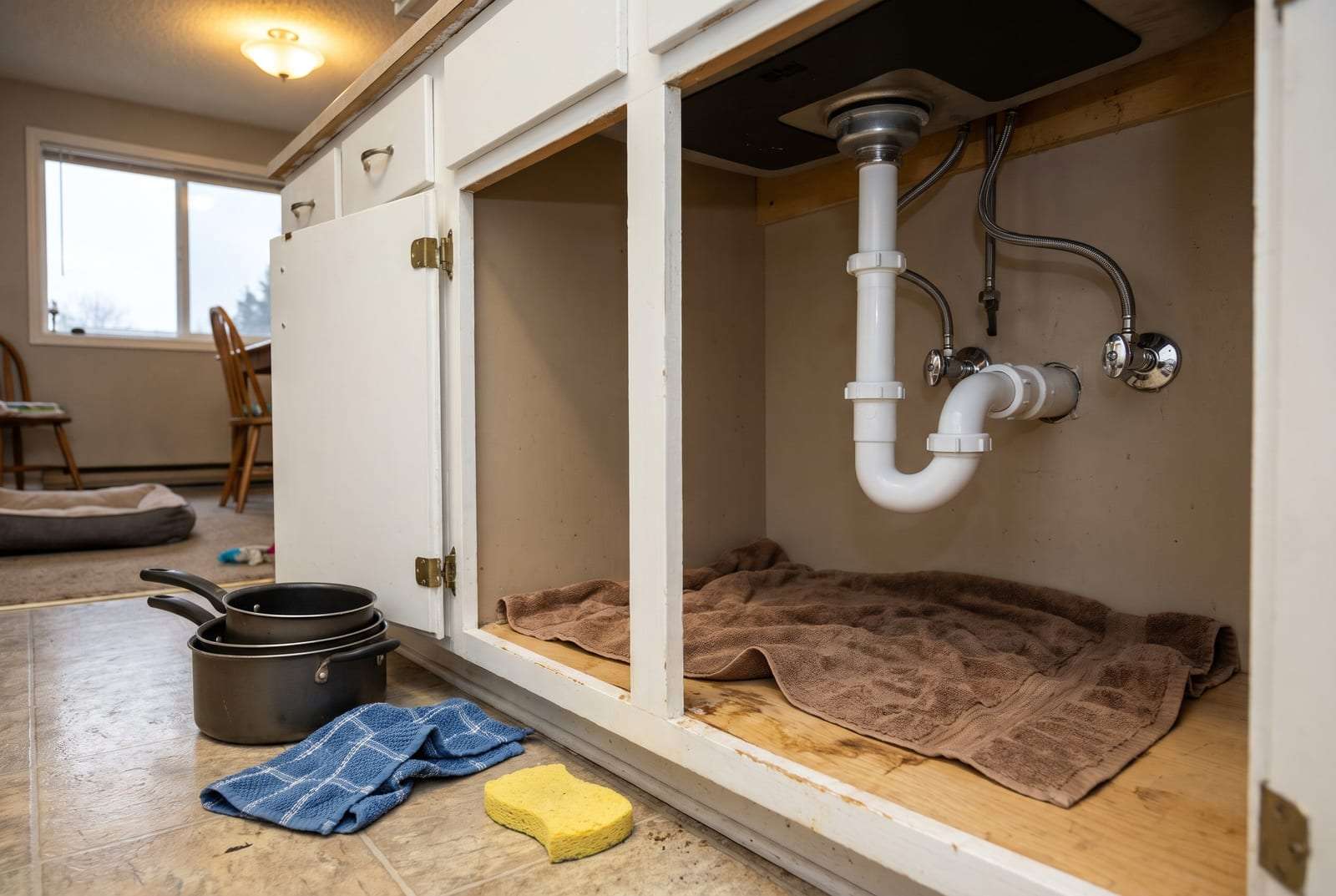
Most single-fixture clogs come out with a plunger, a cleaned stopper or a hand auger. Leave chemical drain cleaners on the shelf: they rarely clear a full clog, they are hard on older pipe, and they can burn whoever opens the trap afterward.
Clearing a Sink
- Pull the pop-up stopper or the basket strainer and clean off the hair and food.
- Seal the overflow hole or the second bowl with a wet cloth, run an inch of water and give a cup plunger a dozen firm strokes.
- If water still stands, set a bucket under the trap, loosen the nuts by hand and clean the trap out.
- Put the trap back hand-tight, run hot water and check the joints for drips.
Clearing a Tub or Shower
- Pull the stopper or unscrew the strainer and lift out the hair with a plastic drain tool or a bent wire.
- Cover the overflow opening with a wet cloth and plunge with a few inches of water in the tub.
- If it is still slow, feed a small hand auger into the drain until it meets the clog, turn it and pull it back.
Clearing a Toilet
- Stop flushing. If the bowl is close to the rim, turn off the valve behind the toilet.
- Use a flange plunger, the kind with a soft sleeve below the cup, and push gently at first, then firmly.
- If that fails, feed a toilet auger into the bowl, crank it until it stops, then pull it back.
- Flush once with a hand on the valve, ready to turn it off if the water rises.
What Not to Do
- Do not pour chemical drain cleaner into a drain that is fully stopped.
- Do not plunge a drain after a chemical has gone down it; the splash can burn.
- Do not keep flushing a toilet that is filling high.
- Do not open a cleanout cap on a line that is backed up.
- Do not send grease, coffee grounds or wipes down any drain.
Stop and Call a Plumber
- More than one fixture is slow or backing up at the same time.
- Water comes up through the basement floor drain or a lower toilet.
- A toilet bubbles when a sink, the tub or the washer drains.
- The clog comes back within days of being cleared.
- An object is stuck in the toilet, or a chemical has gone down a drain that is still blocked.
Roots in Older Drain Lines
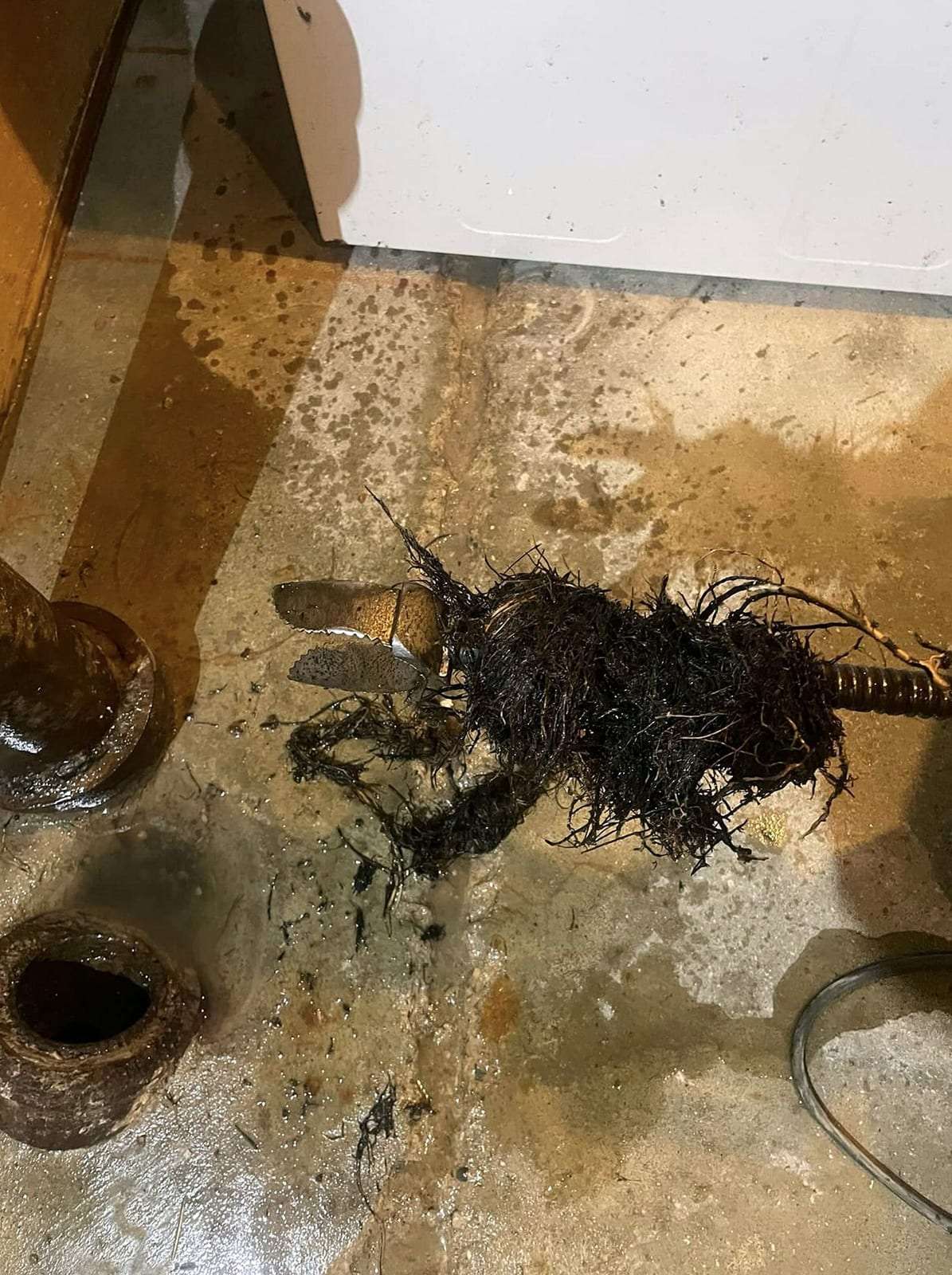
In older Grand Rapids houses, the floor drain and the sewer line beyond it are often cast iron or clay. Roots find the joints and grow into the pipe as fine strands that catch hair, paper and grease until the line closes. The floor drain, the lowest drain in the house, usually shows it first.
Plungers and chemicals do nothing against roots. A plumber cuts them out with a cable machine as part of drain cleaning, and they grow back from what is left at the joint.
Questions About What Causes Clogs
Why does hair clog bathroom drains so quickly?
Soap scum and conditioner make hair sticky. Strands catch on the stopper linkage and the bend of the trap, and each shower adds more until the mat closes the pipe. A drain screen and clearing the stopper every few weeks keep most bathroom drains open.
Are flushable wipes safe to flush?
It is better not to. Wipes do not break apart the way toilet paper does. In an older cast iron or clay line, they catch on rough spots and roots and hold paper behind them until the line closes. Wipes belong in the trash, whatever the package says.
Why does a drain clog again soon after it was cleared?
A plunger or a small auger often punches a hole through the clog and leaves most of it on the pipe walls, so the drain narrows again within weeks. Roots that grow back, and a sag in the line where paper settles, are the other usual reasons.
Can cold weather make drains back up?
It can. In a hard Michigan winter, frost or snow can close the vent pipe on the roof, and drains then gurgle and run slowly across the house. A drain line in an unheated crawl space can also freeze, and it should be checked for cracks once it thaws.
When a Clog Will Not Clear
If a plunger and an auger have not opened the drain, or water is coming up somewhere it should not, schedule a plumber or call (616) 681-4424. Until then, keep water use in the house low and leave the drain as it is.