
Water Heater Repair and Replacement in Grand Rapids
Water heater replacement is one of the calls we get most often, from houses, townhomes, rentals and storefronts around Grand Rapids. Not every failing heater needs replacing, though: many problems come down to one part that can be repaired.
Signs of Water Heater Trouble and What They Point To
Most water heaters give some warning before they fail. The same sign can mean a small repair on a newer heater and a replacement on an older one.
| Sign | What it may mean | Repair or replace consideration |
|---|---|---|
| No hot water at all | Gas: a pilot that went out or a worn thermocouple. Electric: a tripped breaker or a failed element | Usually a repair, unless the tank is old or leaking |
| Hot water runs out fast | A failed element, a broken dip tube or sediment; cold Michigan winter water makes it worse | A repair, unless the tank is too small for the household |
| Rumbling or popping | Sediment on the tank bottom, with trapped water boiling under it | Flushing helps if caught early; an old, loud tank is near its end |
| Rusty hot water | A spent anode rod and rust inside the tank; if the cold is rusty too, suspect old galvanized pipe, common in older Grand Rapids houses | A sound tank may need only a new anode rod; rust from inside means replacement |
| Water around the base | A leaking drain valve, a loose fitting or the tank itself | Fittings and valves are repairs; a leaking tank body is not |
| Relief valve dripping | High pressure or temperature, often thermal expansion, or a worn valve | A repair, once the cause of the pressure is found |
| Pilot will not stay lit | A worn thermocouple, a dirty pilot, or a draft or venting problem | Usually a repair; venting problems need prompt attention |
| Rotten-egg smell from the hot side | Bacteria in the tank reacting with the anode rod | Often solved with a different anode rod and a flush |
| Age past about 10 years | Wear builds up even without symptoms | Weigh a large repair against a planned replacement |
Repairing a Water Heater or Replacing It
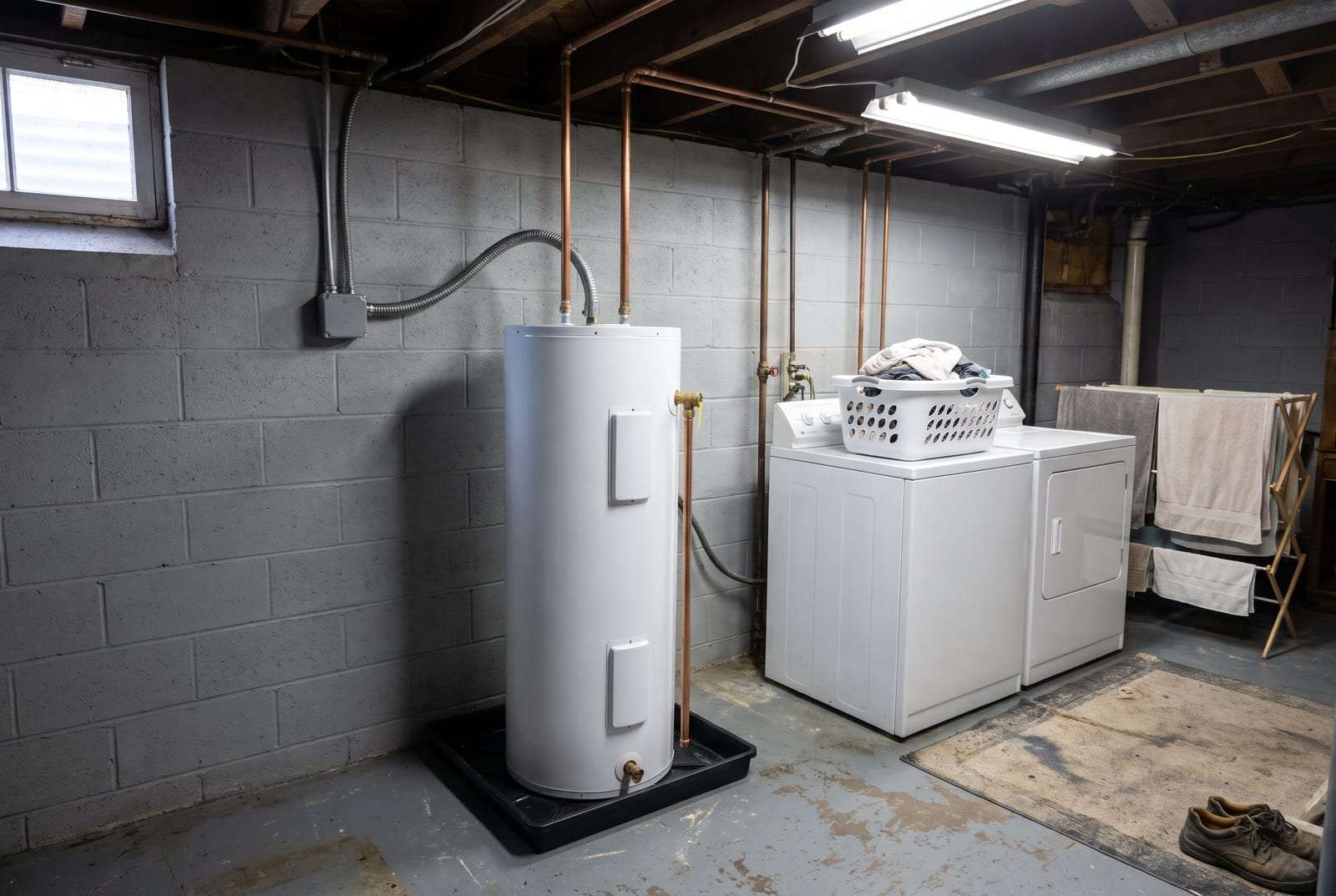
Most of what goes wrong outside the tank can be repaired: the thermocouple, gas control or burner on a gas heater, the elements and thermostats on an electric one, and the relief valve, drain valve and anode rod on either.
The tank itself cannot be repaired. Once water comes from the tank body rather than a fitting, the heater has to be replaced. Age matters too: a costly repair on a tank near the end of its expected life is often better put toward a new one.
If replacement is the answer, the tank, tankless and heat pump options differ in space, venting and running cost, and the choice is easier before the old heater fails.
If You Smell Gas Near the Water Heater
A rotten-egg smell in the air near a gas water heater can mean a gas leak. Do not look for the leak yourself.
- Do not switch lights or appliances on or off, use a phone indoors or light anything.
- Get everyone out of the house.
- From outside and well away from the house, call the gas utility first, or 911.
- Once the utility has made the house safe, call a plumber about the heater.
A rotten-egg smell only in the water from the hot taps, and not in the air, is usually a reaction inside the tank rather than gas.
Checks After the Work Looks Finished
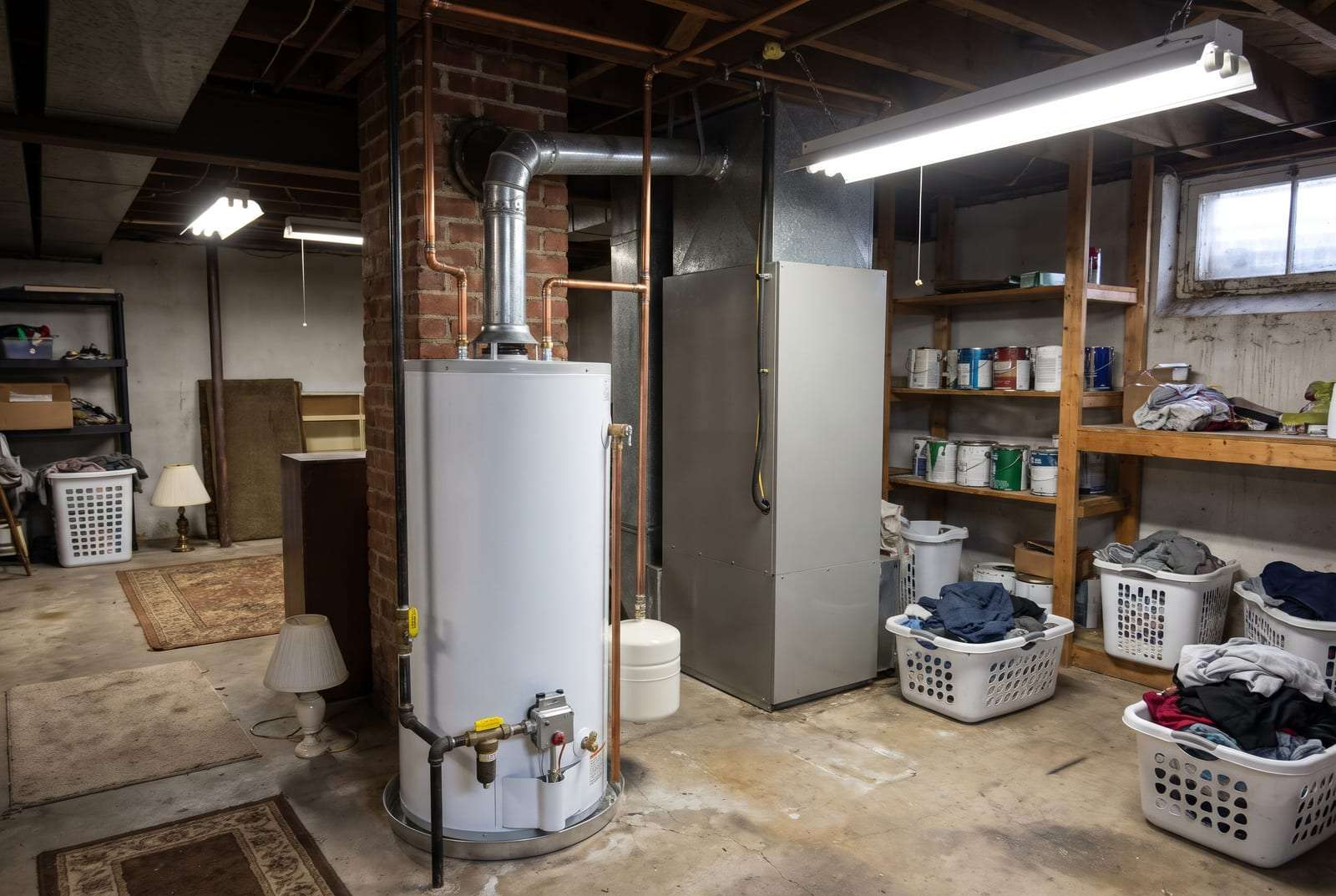
On a water heater, the checks that matter most come after the job looks finished. We measure the temperature at the nearest tap, so the setting is judged by the water that comes out rather than by the dial.
On a gas heater, we test the gas connections for leaks. And we confirm the expansion tank pressure. Where a check valve or pressure-reducing valve closes off the incoming line, the expansion tank takes up heated water as it expands, but only when its air charge matches the house’s water pressure.
Details to Note Before You Call
The age is on the rating label, on the side of a tank or the front of a tankless unit, printed as a date or coded into the first characters of the serial number as a year and a month or week.
- Whether it is a tank or a tankless unit hanging on the wall.
- Fuel type: gas if there is a gas valve and a vent pipe on top, electric if a cable runs into the side and there is no vent.
- The age from the rating label.
- Where it sits, such as a basement, utility closet, garage or crawl space, and how easy it is to reach.
- The symptoms, when they started and whether they are getting worse.
Questions About Water Heater Repair
How long does a tank water heater usually last?
As general guidance, most tank water heaters last about 8 to 12 years. Hard water, sediment that is never flushed and high water pressure shorten that, while regular flushing and a sound anode rod can lengthen it. Tankless units often last longer when they are descaled on schedule.
Why does the relief valve on my water heater drip?
The temperature and pressure relief valve opens when the tank gets too hot or the pressure climbs too high. A drip after the heater runs often points to thermal expansion; steady running can mean a worn valve. Never cap or plug the valve or its pipe, since it protects the tank.
What should I do while I wait if my water heater is leaking?
On a gas heater, turn the gas control to off; on an electric one, switch off its breaker. Then close the cold-water valve on the pipe above the tank so it stops refilling, and set a pan or towel under the leak.
What temperature should a water heater be set to?
Many households set it near 120°F, hot enough for showers and washing while lowering the risk of scalding. Much lower settings can let bacteria grow in the tank. The dial is rarely exact, so a kitchen thermometer under a hot tap gives the true figure.
Getting Your Hot Water Back
If your water heater shows any of these signs, request a water heater visit or call (616) 681-4424. Having your notes ready helps us understand the heater before we arrive.