
Pipe and Leak Repair in Grand Rapids
We repair leaking, burst, frozen and noisy pipes in older houses, townhomes, small rental buildings and storefronts around Grand Rapids, Wyoming, Kentwood and Walker. A leak rarely shows where it starts, so the job begins with finding the source. Until then, you can limit the damage.
What You Notice and Where It Usually Starts
Water runs along pipes, joists and drywall before it shows, so a stain is often a few feet from the leak. These are the signs we hear about most.
| What you notice | Possible source | Right away or monitor |
|---|---|---|
| Water stain on a ceiling | A supply line, drain or toilet seal in the room above | Act today: check the room above, and shut off the water if the stain spreads. |
| Damp cabinet floor | A loose trap nut, a worn supply hose or valve, or a dishwasher line | Act today: lay a paper towel under each joint and see which one wets first. |
| Sound of running water with everything off | A toilet that keeps refilling, or a hidden leak in a wall | Check now: listen at each toilet, then watch the water meter. |
| Low pressure at one faucet in an older house with galvanized pipe | Rust narrowing the old pipe, or grit in the aerator | Monitor after cleaning the aerator; pressure that keeps falling points to the pipe. |
| Banging when a valve closes | Water hammer, loose pipe straps or high water pressure | Have it looked at soon: repeated hammering loosens joints. |
| Frost on a pipe in winter | A line in an outside wall, crawl space or attached garage | Right away: open the faucet it feeds and warm the pipe gently, never with a flame. |
| Burst pipe spraying | A pipe split by ice, a failed fitting or a supply hose that let go | Right away: close the main shutoff, then call. |
| Green crust on a copper joint | A slow weep at a soldered joint or fitting | Watch it and plan a repair: the crust means water has been getting out. |
Shut Off the Water and Limit Damage
With a burst pipe or a leak that will not stop, every minute adds water to floors and walls.
- Find the main shutoff. In a house with a basement, it is usually where the water line comes through the foundation wall, near the meter.
- Close it: a round handle turns clockwise until it stops, a lever handle a quarter turn.
- Open the lowest faucet in the house, such as a basement laundry tub, to drain the pipes and take pressure off the leak.
- Keep away from water near outlets, cords or the electrical panel. If you would have to stand in water to reach a breaker, stay out and call the electric utility.
- Move rugs, furniture and boxes out of the wet area, and set buckets or towels under the drips.
- Take photos of the leak and the damage for your records.
- Call us, and say where the water showed and whether it is now off.
If the main shutoff will not turn, do not force it: an old valve can snap. Close the nearest fixture valve instead and call.
Frozen and Burst Pipes
In a Michigan cold snap, pipes freeze in outside walls, crawl spaces, attached garages and along drafty basement sills. A frozen pipe does not always split, but a split often shows only after the pipe thaws.
If a faucet gives only a trickle on a very cold morning, leave it open and keep the main shutoff within reach. Most freezes can be prevented in autumn by draining outdoor spigots and insulating cold pipes before the first hard frost.
Banging Pipes and Falling Pressure
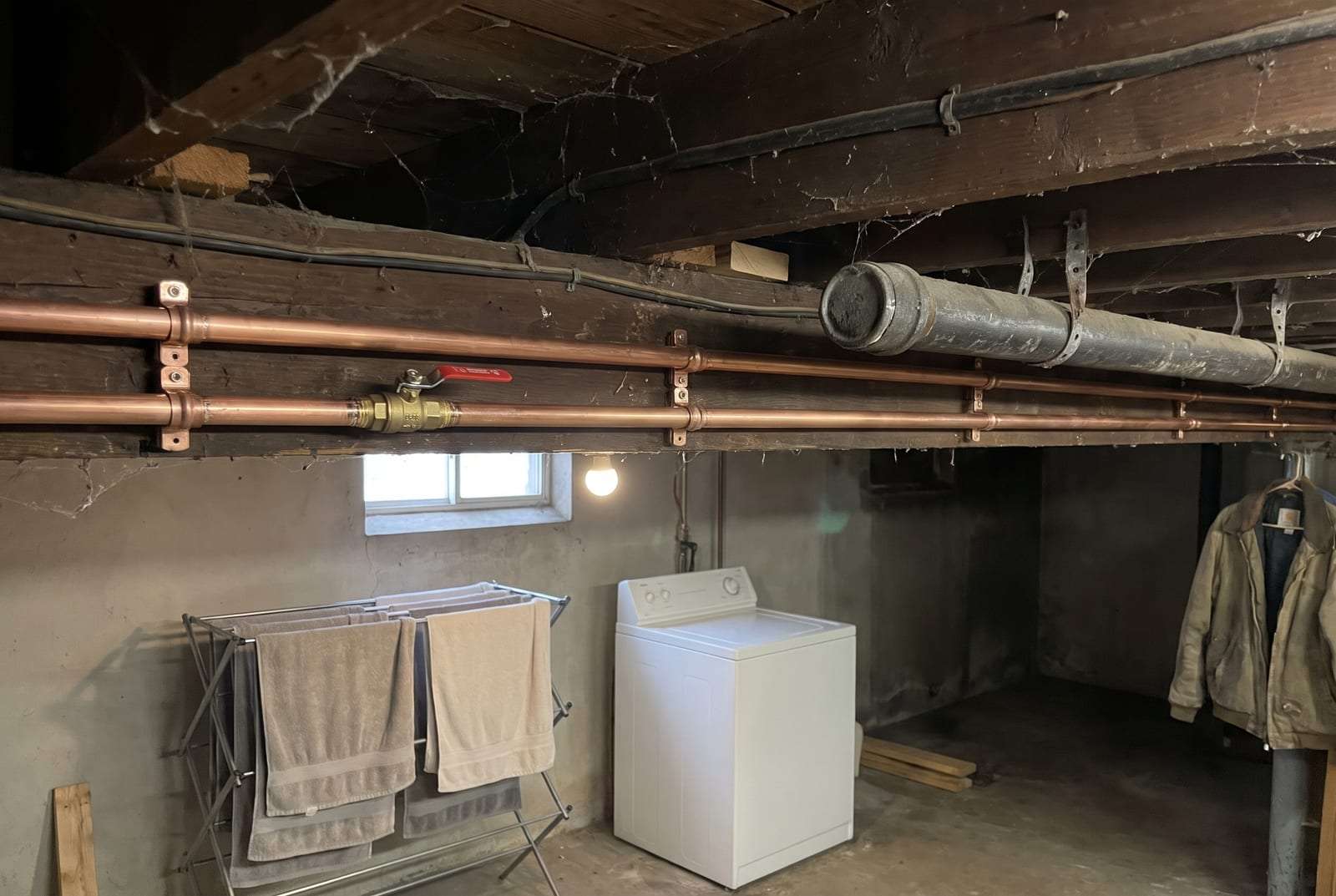
A bang when the washer or a faucet shuts off is water hammer: moving water stopped all at once. Loose straps let a pipe knock against a joist, and high street pressure makes it worse. A plumber usually checks the house pressure first, then adds a pressure-reducing valve, a water hammer arrestor or new straps.
Low pressure at one faucet is often a clogged aerator; through a whole older house, it usually means galvanized pipe narrowing with rust.
Repiping Worn Galvanized and Cast Iron
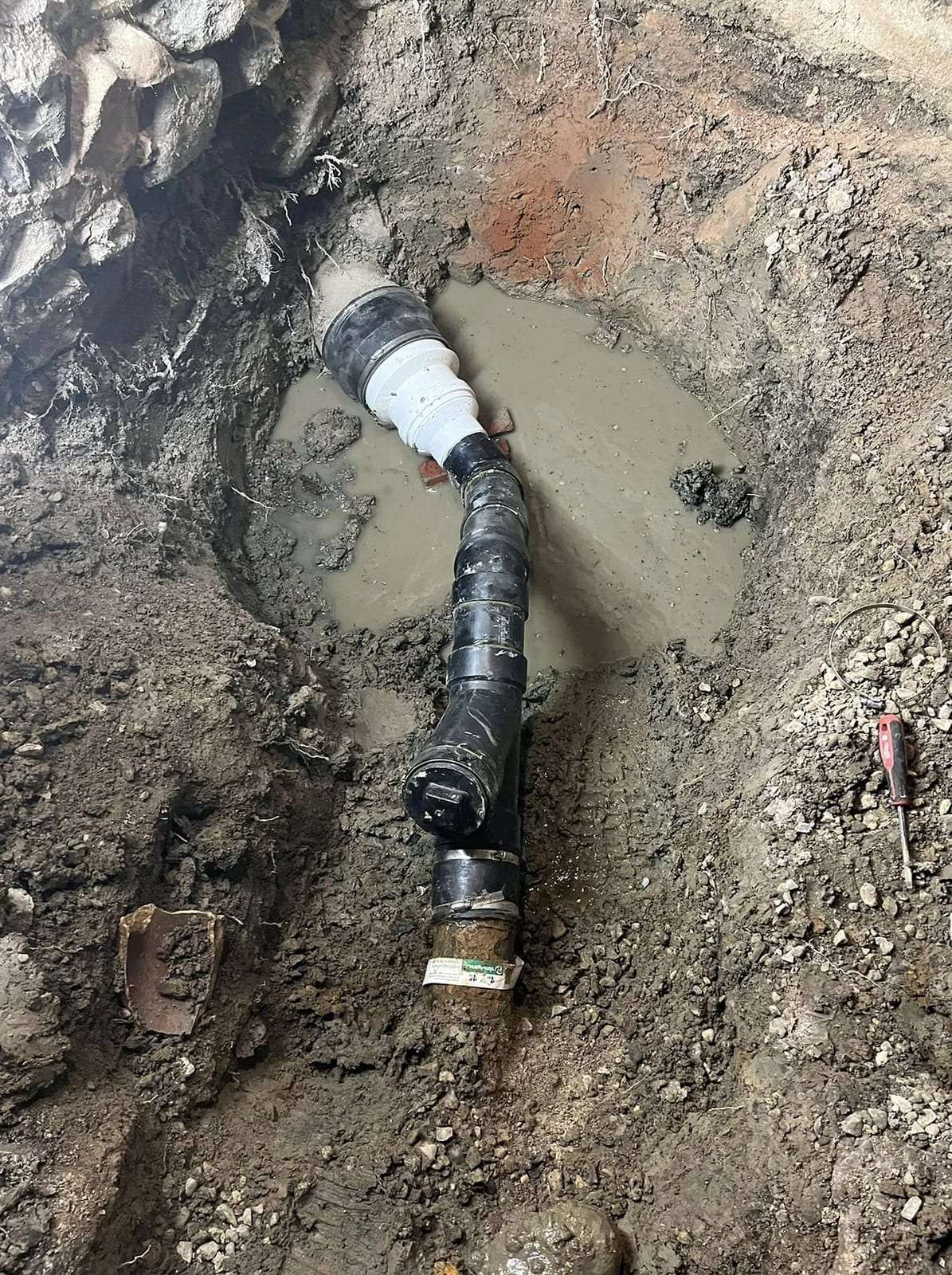
Galvanized supply pipe and cast iron drain pipe are still common in older Grand Rapids houses. When one leak follows another, patching each one stops making sense. We repipe worn supply lines and replace cracked or root-damaged sections of cast iron drain and sewer line, from a single bathroom run to the whole house.
Pressure Testing a New Supply Line
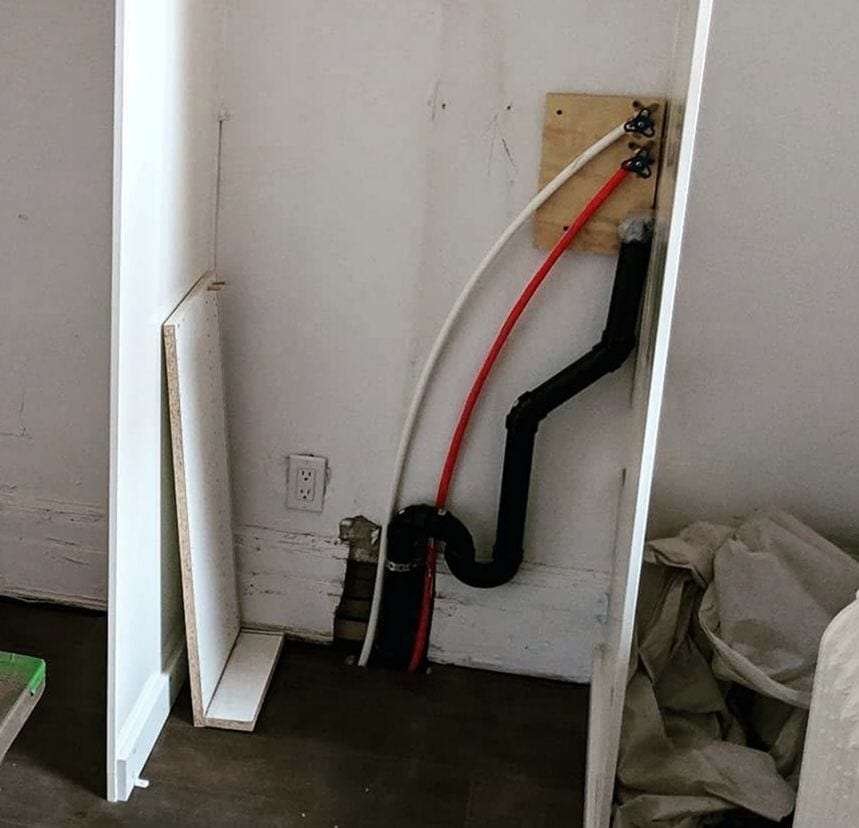
New supply pipe is often run while the walls are open, and once the drywall goes back, a weeping joint is hard to find. We pressure test new supply lines and watch the gauge before anything is closed up behind a wall. A gauge that holds steady shows the run is tight.
Questions About Leaks and Frozen Pipes
Is a small drip under the sink worth fixing right away?
Yes. A slow drip soaks the cabinet floor and can grow mold out of sight. Notice when it drips: only while the sink drains points to the trap or drain line, and all the time points to a supply line, valve or faucet connection.
Can I patch a leaking pipe myself until it is repaired?
For a pinhole in a straight run of supply pipe, a pipe repair clamp can slow the leak for a short while. Shut the water off first. Tape and putty rarely hold on a joint or fitting, and no patch should be closed up inside a wall.
How can I tell whether a leak is inside a wall?
Look for a stain or bubbling paint, a baseboard that stays damp, a musty smell, or a warm spot on the floor above a hot water line. Then turn off every fixture and watch the water meter. If its dial still moves, water is escaping somewhere.
Will a frozen pipe always burst?
No. Many frozen pipes thaw without damage. The risk is the pressure that builds between the ice and a closed faucet, which is why opening the faucet helps. A split often shows only once the ice melts, so watch the pipe closely as water flows again.
Have a Leak Found and Repaired
If the water is off and the pipe needs repair, or a stain is still spreading, book a pipe repair and tell us where the water shows. To talk it through first, call (616) 681-4424.