
A Year-Round Plumbing Plan for Grand Rapids Winters
Plumbing in Grand Rapids has to get through cold winters with deep freezes and lake-effect snow, a wet spring thaw that keeps sump pumps running, and humid summers that make cold pipes sweat. Most frozen pipes and wet basements can be prevented by doing a few tasks in the right season.
Seasonal Plumbing Planner
Tick what your home has, then press Build My Plan.
The Plumbing Year Season by Season
Most of the work comes in autumn, before the first hard frost.
More columns to the right: swipe.
| Season | Task | Where in the home | How often | Why it matters |
|---|---|---|---|---|
| Autumn | Disconnect hoses and drain outdoor spigots | Spigot valves on the basement ceiling | Every autumn | Water left in a spigot freezes and can split the pipe inside the wall |
| Autumn | Insulate pipes on outside walls | Sink walls, crawl space, attached garage | Once, then check yearly | These lines sit closest to the cold |
| Autumn | Flush sediment from the water heater | Basement or utility room | Once a year | Sediment takes up room meant for hot water |
| Winter | Keep the heat at 55 °F or higher | Every room, including an empty unit | All winter | Pipes inside walls rely on the warmth of nearby rooms |
| Winter | Clear snow from the sump outlet | Where the discharge line ends outside | After heavy snow | Lake-effect snow can bury the outlet and send water back to the foundation |
| Spring | Test the sump pump with a bucket of water | Sump pit in the basement floor | Before the thaw | Snowmelt and rain raise groundwater after the pump has sat idle |
| Spring | Reopen spigots and look for drips | Basement ceiling near each spigot | After the last hard frost | A pipe split by ice often leaks only once water runs again |
| Summer | Look for sweating pipes | Cold water lines in the basement or crawl space | In humid spells | Condensation can pass for a leak and keeps joists damp |
| Summer | Check washer hoses and clean aerators | Laundry area, kitchen and bath faucets | Once a year | A bulging hose can fail without warning |
Before the First Freeze
Work through this list in autumn, before snow covers the spigots and the sump outlet.
- Garden hoses disconnected, drained and stored.
- Outdoor spigots shut off inside and drained.
- Main shutoff found, clear of stored boxes and known to turn.
- Foam insulation on pipes along outside walls, in the crawl space and in the garage.
- Drafts sealed where pipes pass through the rim joist or foundation.
- Crawl space vents closed and the access door shut tight.
- Sump pump tested and its discharge line clear to the outlet.
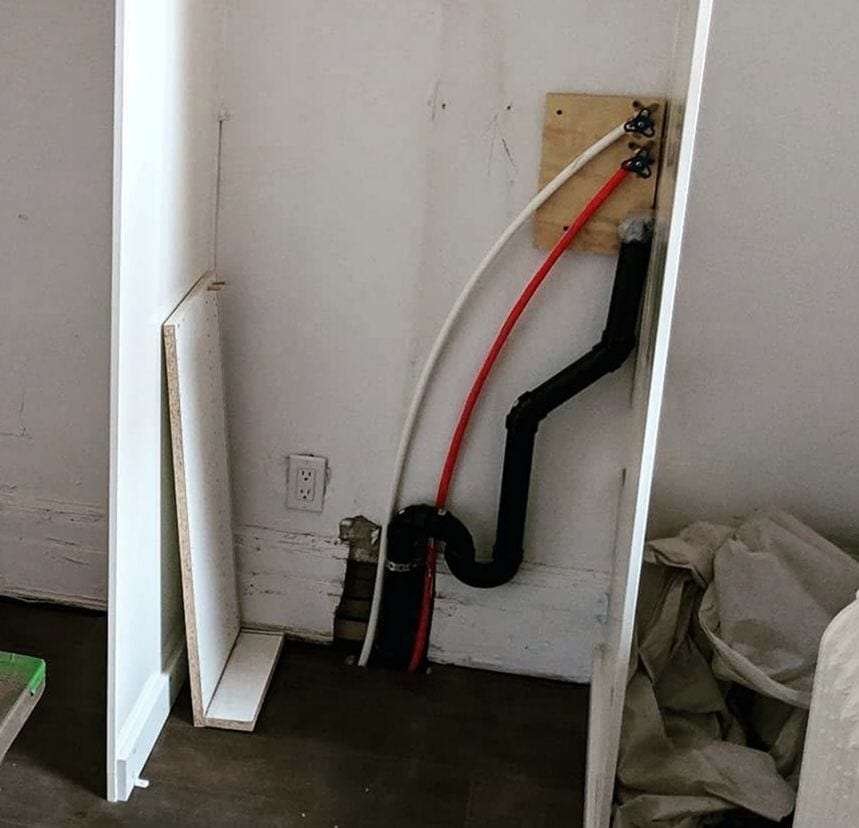
Supply lines inside an outside wall freeze first, often at a kitchen sink under a window. When a remodel opens that wall, move the lines to an inside wall or put insulation between them and the cold side.
Shut Off and Drain Outdoor Spigots
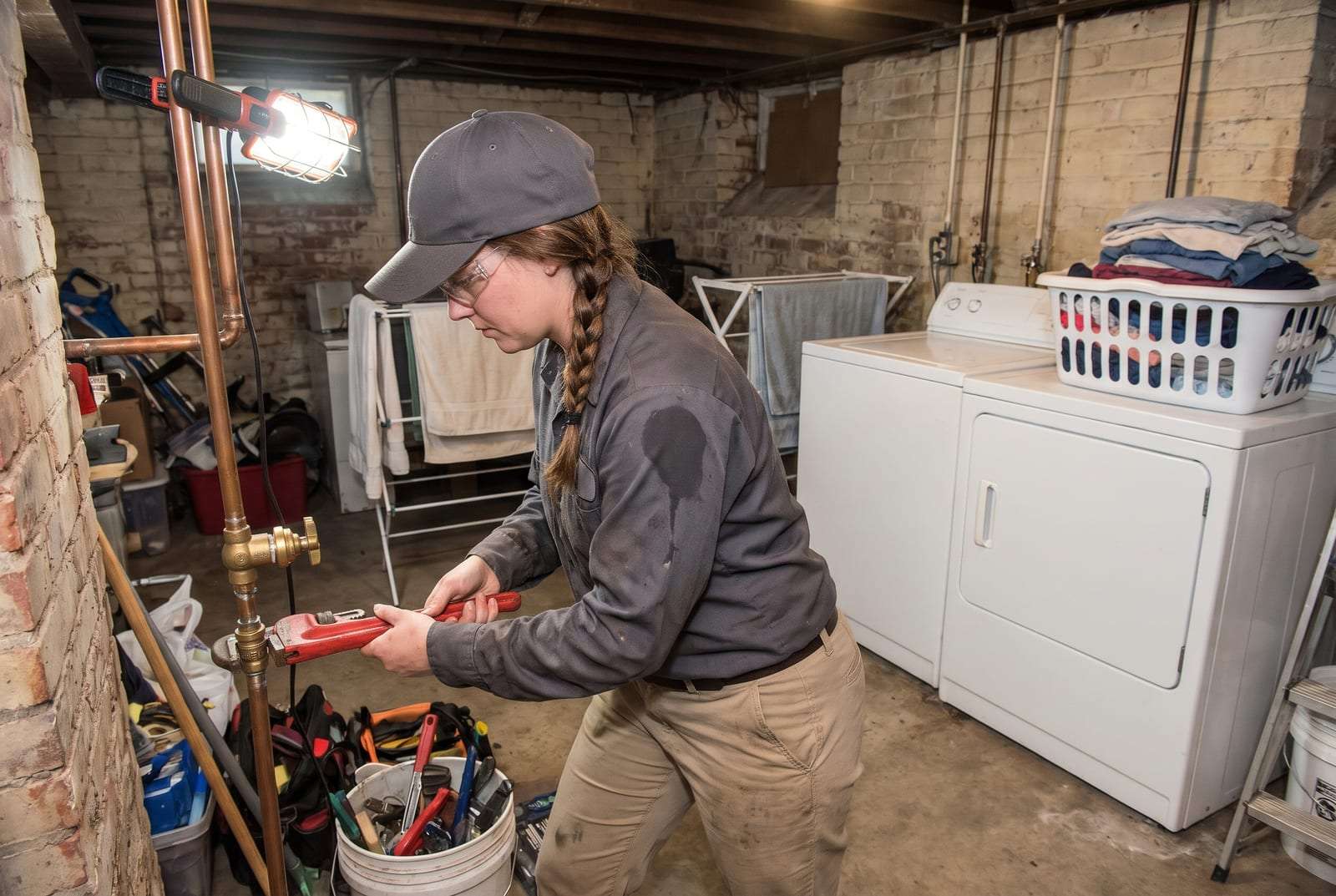
Many older houses have an inside shutoff valve for each outdoor spigot, usually on the basement ceiling near the wall. A frost-proof sillcock closes inside the wall, where it stays warmer, but it only drains with the hose off.
- Disconnect every hose, frost-proof sillcocks included. A hose left on holds water in the spigot, where it can freeze and split the pipe.
- Close the inside shutoff valve for each spigot.
- Open the outside faucet and leave it open so the line can drain.
- Over a bucket, open the small bleeder cap on the inside valve, let the water out, then close the cap.
- In spring, close the outside faucet, open the inside valve and check for drips before using the hose.
Thaw a Frozen Pipe Safely
A faucet that gives only a trickle on a very cold morning usually has ice in the line. If the pipe has split or bulged, close the main shutoff and arrange a pipe repair before thawing it: the leak starts as the ice melts.
- Open the faucet the pipe feeds, hot and cold, so melting water has somewhere to go.
- Find the frozen stretch, usually along an outside wall, near a basement window or in a crawl space or garage.
- Start warming next to the faucet and work back toward the frozen section.
- Use a hair dryer, a heating pad or warm wet towels. A space heater can warm the area if it stays away from water and anything that can burn.
- Never use an open flame or a torch.
- Keep warming until full pressure returns, then check the whole run for drips.
If the frozen pipe is inside a wall or ceiling, leave the faucet open, raise the heat in the room and call rather than cut into the wall.
Questions About Frozen Pipes and Seasonal Care
Should I let faucets drip on very cold nights?
On the coldest nights, a slow drip from a faucet on an outside wall keeps water moving and relieves pressure if ice starts to form. Let hot and cold both drip, and open the sink cabinet doors so room heat reaches the pipes.
How cold does it have to get before pipes freeze?
There is no single number. Pipes in an outside wall, crawl space or attached garage are at risk once it drops to around 20 °F outside, sooner with wind or a draft on them. A long cold stretch matters more than one cold hour.
What should I do with the water before a winter trip?
Keep the heat at 55 °F or higher and leave sink cabinet doors open on outside walls. Closing the main shutoff limits how much water a failed pipe can release while no one is home. For a long trip, ask someone to check the house in a cold snap.
Why do cold water pipes drip in summer?
In humid weather, cold water lines in a basement or crawl space collect condensation, the way a cold glass does. The drips look like a leak and keep joists and insulation damp. Foam pipe insulation and a dehumidifier usually stop it. A drip on a dry winter day is a leak.
When Winter Gets Into the Pipes
If a pipe has frozen, a spigot leaks inside the wall or the sump pump has stopped, book service and tell us what you found. You can also call (616) 681-4424.