
Drain Cleaning and Sewer Backups in Grand Rapids
A drain that slows over a few weeks and a drain that backs up all at once are different problems. The first is usually a clog near the fixture that you can often clear yourself. The second is a blockage in the main drain or the sewer line, and it gets worse each time water runs. We clear both.
Signs a Drain Needs a Plumber
These signs point to a clog that a plunger will not reach:
- The same drain slows down again within days of being plunged.
- Two or more fixtures are slow at the same time.
- A toilet gurgles when a sink, the tub or the washer drains.
- Water comes up through the basement floor drain.
- A damp or sunken patch of lawn sits over the sewer line.
Drain Symptoms and Where the Blockage Usually Sits
A clog in one fixture is usually in its trap. Trouble at the lowest drain, or at several fixtures at once, sits further down the line.
| Symptom | Where it shows up | Likely cause | Try first or call a plumber |
|---|---|---|---|
| Slow drain that smells of old food | Kitchen sink | Grease and food scraps hardened in the trap and the pipe beyond it | Try first: plunge with the other bowl sealed |
| Water stands in the tub while you shower | Bathroom sink, tub or shower | Hair and soap scum on the stopper or in the trap | Try first: pull the stopper and clear the hair |
| Bowl fills high, then drains slowly | One toilet | Too much paper, a wipe or a small object in the trapway | Try a flange plunger; call if an auger does not clear it |
| Water pools at the grate after the washer runs | Basement floor drain | Lint and silt in the trap or the line below it | Call: it usually joins the main line close by |
| Several drains slow, the lowest one overflowing | Floor drain or the lowest toilet | A blockage in the main drain or the sewer line | Call a plumber and stop running water |
| Backups that return every few months | Floor drain and the lowest fixtures | Tree roots in older cast iron or clay sewer pipe | Call: roots grow back until the line is cut clear |
| Sewer smell with no backup | A floor drain or an unused tub | A dry trap letting sewer gas through | Try first: pour a bucket of water into the drain |
What to Do When a Drain Backs Up Before You Call
For one slow sink or tub, the steps for clearing a simple clog are often enough. When water is coming up through a drain, these steps keep the damage small.
- Stop using water in the house: no flushing, dishwasher or laundry until you know which drain is blocked.
- Check which fixtures still drain. Water at the floor drain or the lowest toilet means the main line is blocked.
- For one sink or tub, try a cup plunger with the overflow covered. Keep plungers out of a backed-up floor drain.
- Skip chemical drain cleaner. It rarely opens a full blockage and can burn whoever opens the line next.
- Leave cleanout caps closed. On a backed-up line, the water behind the cap comes out with force.
- Move stored boxes away from the floor drain, and clean up with rubber gloves and a household disinfectant.
How We Clear a Drain and Check the Line
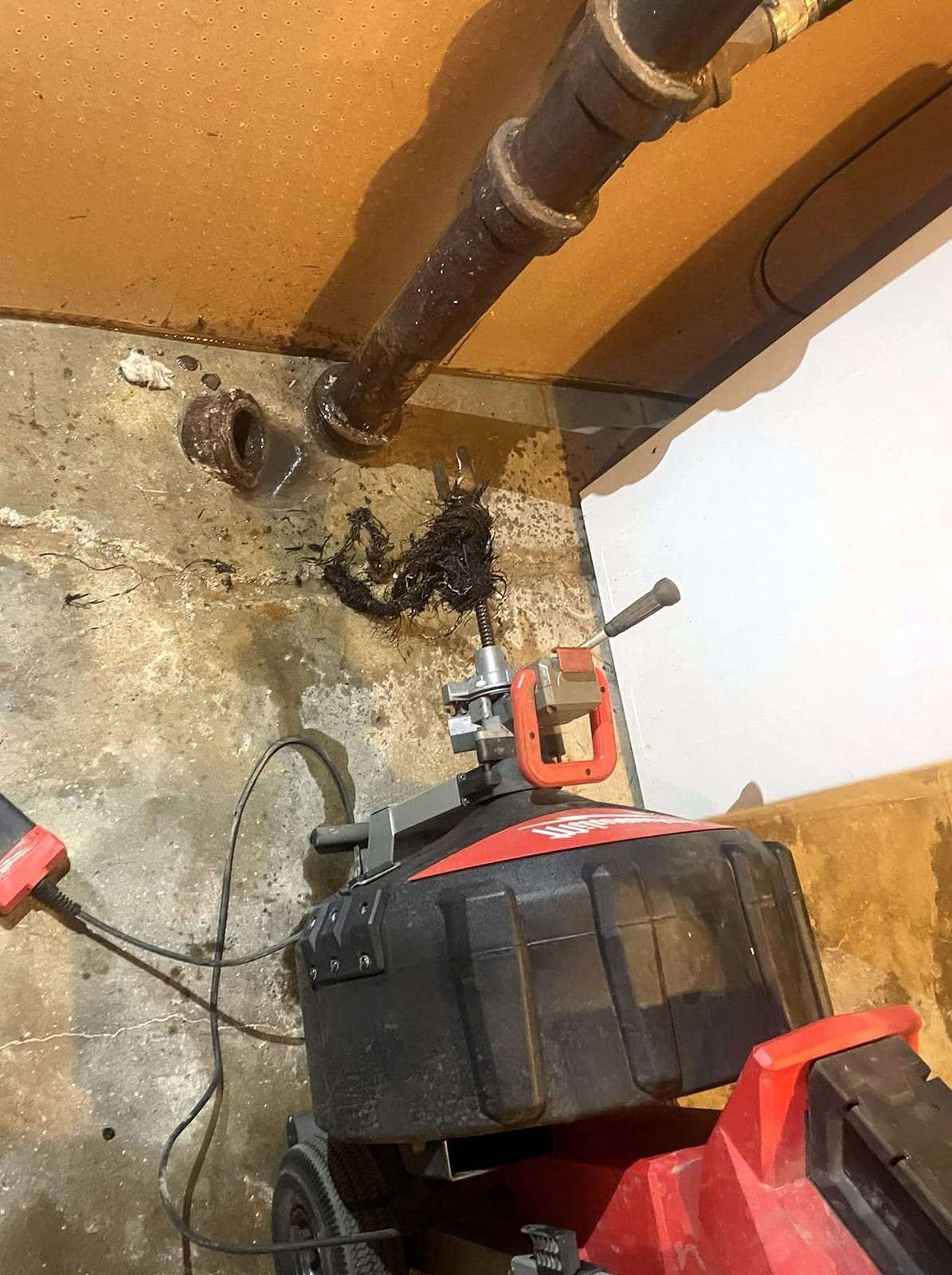
A clog in one fixture usually sits in the trap, where a hand auger reaches it. A blocked main drain needs a drain machine: a motor turns a steel cable with a cutting head that breaks up grease, paper and roots.
After clearing a drain, we run water through it for several minutes to see that it keeps moving. A line can open enough to drain one sink and still be half blocked further down.
On sewer lines, we send a camera through to look at the pipe itself. A cable can punch a hole through roots or a sag and leave the cause in place. The camera shows whether the pipe is cracked, separated at a joint or sitting low where paper collects.
Roots and Broken Pipe in Older Sewer Lines
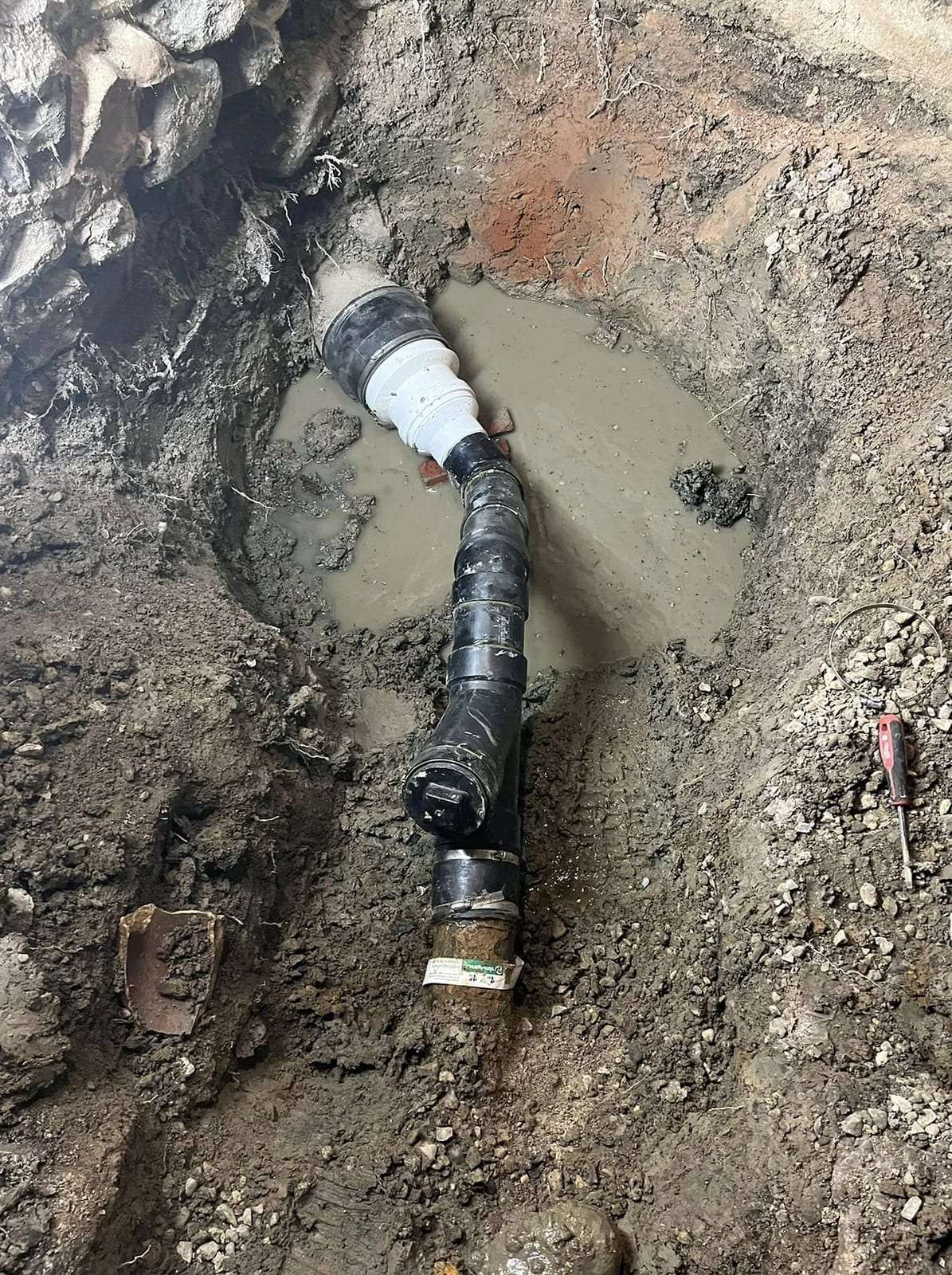
Many older houses in Grand Rapids, Wyoming, Kentwood and Walker still drain to the street through cast iron or clay pipe. Roots find the joints in clay, and cast iron scales and cracks from the inside.
Cutting roots opens the line, but they grow back from what is left at the joint. When a section is broken or has collapsed, the usual repair is to dig down to it, cut it out and join new PVC pipe to the old line with rubber couplings.
Questions About Clogs and Drain Lines
Are chemical drain cleaners safe for my pipes?
They are hard on pipes and on people. Most work by heat and lye, which can soften plastic traps and eat at old metal pipe, and they rarely clear a full blockage. A dose that fails stays in the line, where it can burn whoever opens the trap next.
Why does my kitchen sink keep clogging?
Grease is the usual reason. It goes down warm, then cools and coats the pipe, and food scraps stick to it. Wipe greasy pans with a paper towel before washing them. A sink that clogs every few weeks has buildup further down the line that needs a cable.
Why did the floor drain back up when the washer ran?
A washer sends a lot of water at once. If the main drain is partly blocked, that water comes up at the lowest opening in the house, usually the floor drain. Stop the washer, hold off on flushing and call a plumber. Clearing lint from the grate will not reach the blockage.
Does every clog need a sewer camera?
No. A clog in one sink or tub is a trap problem, and a camera adds nothing there. It makes sense when backups keep coming back, when roots come out on the cable or when an older house still has its original sewer line.
Getting a Backed-Up Drain Cleared
If a drain keeps slowing down or water is coming up through the floor drain, book a drain cleaning visit or call (616) 681-4424. Tell us which fixtures are affected and what you have tried so far.