
Choosing a Water Heater for a Grand Rapids Home
A new water heater does not have to be the same kind as the old one. The household, the space and the fuel decide which of the five common options suits a house, and the cost depends mostly on what changes around the heater.
Water Heater Options Comparator
Choose your household, space and fuel, then press the button.
How the Five Options Compare
Every option heats water well when it is matched to the house. They differ in the room and venting they need, their running cost and their upkeep.
More columns to the right: swipe.
| Option | How it works | Best suited to | Space and venting needs | Running-cost factors | Maintenance needs |
|---|---|---|---|---|---|
| Standard gas tank | A gas burner under a storage tank; natural-draft exhaust | Gas houses with a sound chimney or flue | Combustion air and a vent straight up | Gas use and standby heat loss | Yearly flush, anode check, relief valve test |
| Power-vent gas tank | The same tank, with a fan blowing exhaust through plastic pipe | Gas houses without a usable chimney | An outlet and a vent route to an outside wall | Gas use plus a little electricity for the fan | As a standard tank; keep the wall vent clear of snow |
| Electric tank | Two heating elements; no flame, no vent | Houses without gas, and tight closets | A dedicated 240-volt circuit only | Electricity rates; slow recovery needs a bigger tank for big households | Yearly flush; replaceable elements and thermostats |
| Heat pump water heater | A compressor moves heat from room air into the tank | Roomy basements above roughly 40–50°F | Plenty of air, a condensate drain, a 240-volt circuit, headroom | Lowest electricity use of the tank options | Clean the filter, keep the condensate line clear, flush |
| Gas tankless | A burner heats water as it flows; nothing stored | Households that keep running out of hot water | Wall space, a gas line sized for it, its own vent | No standby loss; gas use follows hot water use | Descaling on schedule, more often with hard water |
Space, Venting and Fuel in Older Grand Rapids Houses
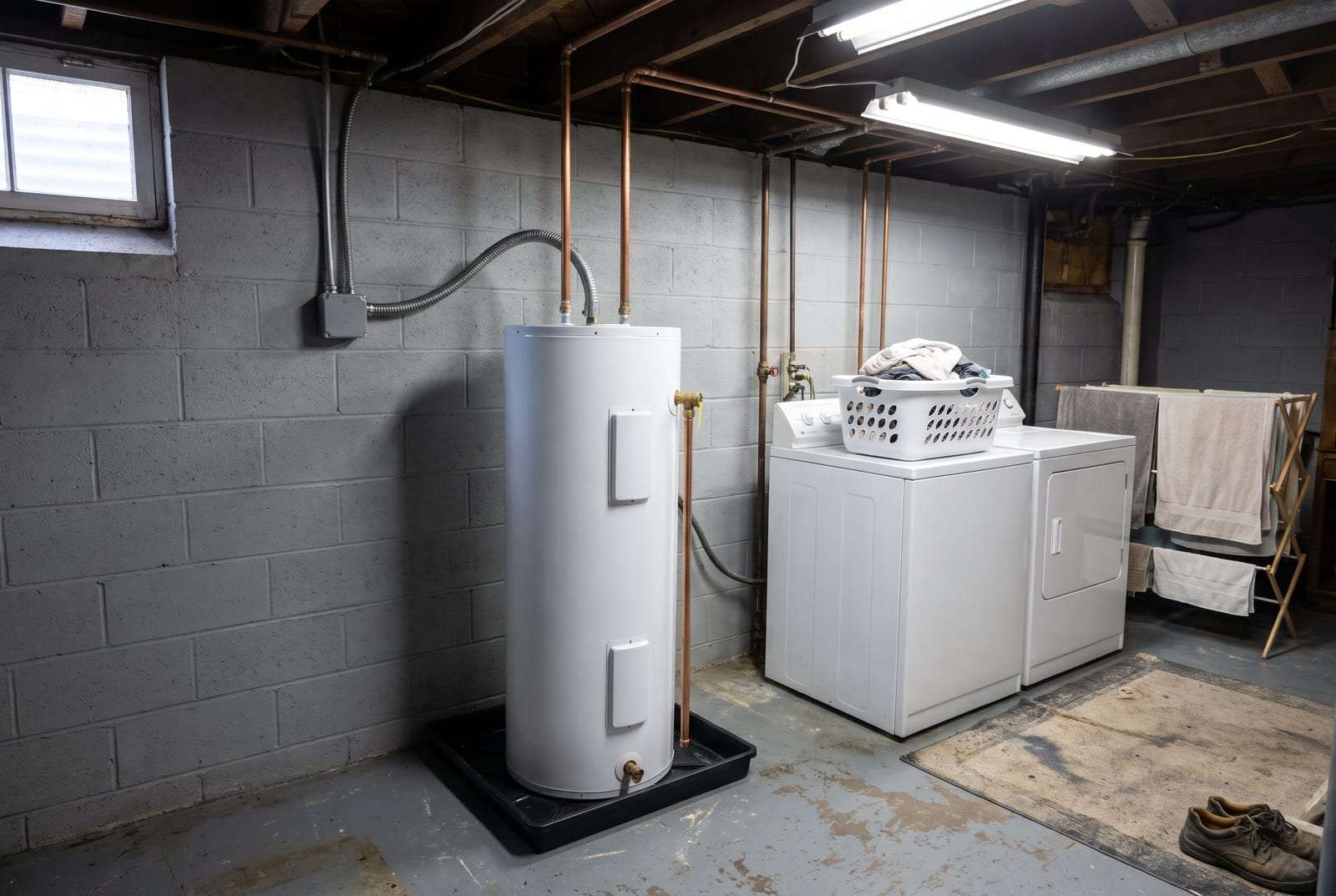
In many older Grand Rapids houses, the water heater shares a masonry chimney with the furnace. Once the furnace is replaced with a high-efficiency model that vents out a side wall, that chimney may need a liner before a standard gas tank can go back in, which is one reason a power-vent tank is often considered.
A basement suits a heat pump water heater best, with plenty of air and a floor drain close by; a tight closet or crawl space suits an electric tank or a wall-hung tankless unit.
What Affects the Cost
The heater is only part of the cost of a replacement. What changes most from house to house is the work around it: the gas line, venting, wiring and space.
| Factor | Why it changes the cost | Direction: raises or lowers |
|---|---|---|
| Switching fuel type | Gas needs a new line and a vent; electric needs a 240-volt circuit | Raises |
| New venting | A new vent route, or a liner for a chimney the furnace no longer uses | Raises |
| Moving the location | Water, gas, drain or electrical lines must reach the new spot | Raises |
| Expansion tank or code updates | Current code may call for parts an older setup lacks | Raises |
| Tank size | A larger tank costs more to buy and keep hot; the right size avoids waste | Can raise or lower |
| Access to the space | Narrow stairs, tight closets and crawl spaces slow the swap | Raises when access is tight |
| Tankless gas line upsizing | A tankless burner draws far more gas at once, so the line may need larger pipe | Raises |
| Efficiency of the new heater | Heat pump and tankless models cost more to buy but use less energy | Raises up front, lowers over time |
| Same type in the same place | A like-for-like swap reuses the existing connections | Lowers |
Questions to Settle Before Choosing
First, be sure the old heater needs replacing at all; many faults are repairable parts rather than a failed tank.
- How many people use hot water, and how much of it runs at once?
- Is there a gas line to the present heater, and where does it vent?
- Does the furnace still share the chimney?
- How much room is around the heater, and does the space stay warm in winter?
- Is there a floor drain nearby for a heat pump’s condensate?
- Does the electrical panel have room for a new 240-volt circuit?
- Which matters more: the lowest cost now or the lowest running cost later?
Questions About Choosing and Replacing a Water Heater
Is a tankless water heater a good choice for a family?
It can be. A gas tankless unit does not run out of hot water, but it limits how many taps run hot at once, so a busy family needs a unit sized for that flow, a gas line to match and regular descaling.
Will a heat pump water heater work in a Michigan basement?
Usually, yes. Most basements stay above the roughly 40–50°F a heat pump needs and have the air it draws heat from. It cools and dries the basement as it runs, welcome in summer and noticeable in winter, and needs a drain for its condensate.
What size water heater do I need?
As a rough guide for gas tanks, one or two people often manage with 30 to 40 gallons, three or four with 40 to 50, and five or more with 50 or larger. Electric tanks usually go a size up because they reheat more slowly.
Should I replace a water heater before it fails?
Once a tank is past about 10 years old, or shows rust, rumbling or a weep at the base, planning the replacement is usually wiser than waiting. A planned job leaves time to compare the options and arrange any gas line, vent or wiring changes.
Planning a Water Heater Replacement
When you have narrowed the choice, or want it weighed against your house, book a replacement visit or call (616) 681-4424. Knowing your household size, the space and the fuel makes that conversation short.